
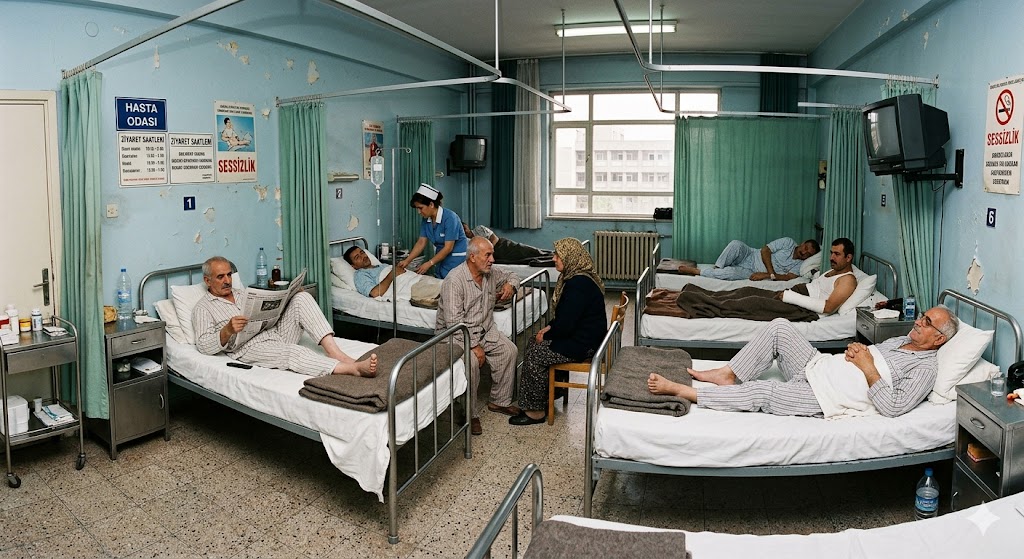
Daha 20 yıl önce böyleydi...
Gemini, what are your thoughts on the healthcare system in Türkiye?
The fact that almost the entire population is covered by health insurance in some way thanks to the General Health Insurance (GSS) is a significant advantage. Compared to many developed countries, citizens have considerable flexibility in choosing hospitals and doctors.
The Turkish healthcare system is a highly dynamic structure that encompasses both great successes and strengths, as well as chronic structural challenges that need to be addressed. From an outsider’s perspective, we can summarize the most striking aspects and the current state of the system under a few key headings:
Key Strengths
Universal Health Insurance and Wide Access: The fact that almost the entire population is covered by health insurance in some way thanks to the General Health Insurance (GSS) is a significant advantage. Compared to many developed countries, citizens have considerable flexibility in choosing hospitals and doctors.
Health Tourism and Medical Success: Turkey, especially in cities like Istanbul, Antalya, and Ankara, has world-class hospitals and technical infrastructure. It is among the top choices for foreign patients in a wide range of fields, from plastic surgery to oral and dental health, organ transplantation to oncology.
High Competence of Physicians and Healthcare Workers: Turkish physicians and healthcare personnel possess immense clinical practice and crisis management skills due to the high variety of cases and patient volume.
Key Challenges in the System and the Need for Digitalization
These extensive opportunities offered by the system also bring some burdens and shortcomings:
Excessive Patient Load and Time Pressure: The very limited time physicians can allocate per patient (sometimes as little as 5 minutes) in appointments made through the MHRS (Central Physician Appointment System) reduces patient satisfaction and leads to burnout among healthcare workers.
Inadequate Primary Care: The inability of the family medicine system to fully function as a “filter” causes patients to directly apply to training and research hospitals or university hospitals even for the slightest complaint. This creates unnecessary congestion at higher levels of care.
Digitalization and Artificial Intelligence Potential: With systems like e-Nabız, Turkey is ahead of many countries in digital health infrastructure. However, in the future, it seems essential that artificial intelligence and automation play a more active role in areas such as reducing administrative burdens, optimizing appointments, and data management (e.g., more integrated operation of clinical software and patient tracking programs). While Turkey’s healthcare system has a very strong backbone in terms of accessibility and infrastructure, its sustainability directly depends on improving the working conditions of healthcare professionals and overcoming the time barrier between patients and doctors.
About the Author


