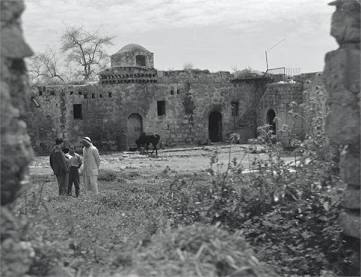
Yeni pencerede açılır Ebu Şuşa Köyü Arşiv Fotoğrafı (1948). Kaynak: Wikipedia / Abu Shusha massacre - Wikipedia
Can you give us information about the Abu Shusha Massacre (1948)?
The Abu Shusha Massacre is one of the tragic and dark events of the 1948 Arab-Israeli War and the subsequent expulsion of Palestinians, known as the “Nakba” (Great Catastrophe).
The historical background, development, and consequences of the event are as follows:
1. Date and Location
The massacre took place on May 13-14, 1948, exactly one day before the official declaration of independence by the State of Israel. The location was Abu Shusha, a Palestinian Arab village with a population of approximately 900 at the time, located about 8 kilometers southeast of Ramle.
2. Development of the Event (Operation Barak)
Abu Shusha village was targeted as part of Operation Barak (and its component Operation Maccabi), conducted by Zionist military forces to clear the area and gain control of strategic roads.
- On the night of May 13, the Givati Brigade (one of the founding brigades of the Israel Defense Forces) first subjected the village to intense mortar fire.
- Then, units from the 51st and 54th battalions raided the village, advancing street by street.
- While some villagers tried to flee for their lives, many houses were blown up with explosives.
3. Massacre and Disappearances
Systematic violence was inflicted on civilians who could not leave the village or who surrendered during the raid.
- Historical research and Palestinian sources indicate that between 60 and 70 civilian villagers were massacred during the raid.
- Military reports and eyewitness accounts from that period detail attempted rapes of captured women and barbaric practices against civilians.
- Arab authorities and military units in the region urgently called on the International Red Cross to intervene in response to this tragedy, but the massacre could not be prevented.
4. Aftermath and the Fate of the Village
The last Palestinian civilians who survived the massacre and resisted remaining in the village were forcibly expelled from the area on May 21, 1948. Jewish settlements (kibbutz) were later established on the emptied village lands.
Historical Traces: The last remaining house ruins and structures of Abu Shusha village were completely demolished and erased from the map by the Israeli Land Administration in 1965. In 1995, excavations in the area uncovered a mass grave containing 52 skeletons, but no official forensic determination has been made regarding the cause of death of the deceased.
Along with massacres such as Abu Shusha, Deir Yassin, and Tantura, it has gone down in history as one of the most concrete and painful examples of the climate of fear that caused hundreds of thousands of Palestinians to flee their lands in 1948.
About the Author