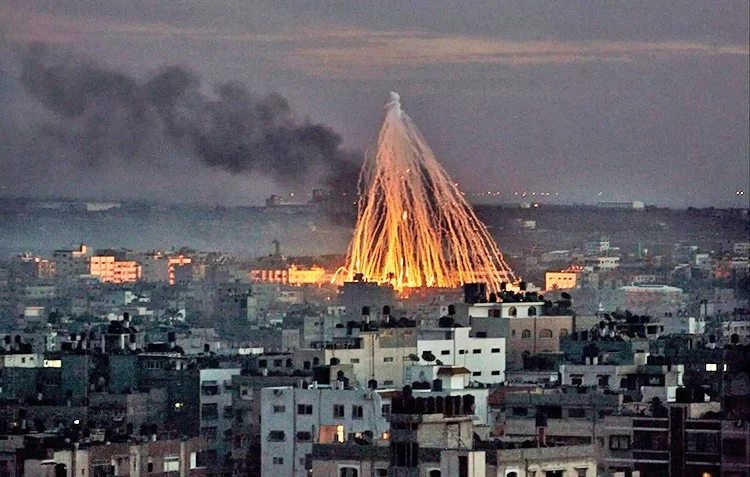
İsrail fosfor bombalarını hangi cüretle kullanıyor?
How dare Israel use phosphorus bombs?
Since its founding, which international agreements has Israel ratified and which have it not signed?
Since its establishment in 1948, Israel has been a party to numerous global conventions as part of international law and diplomatic relations; however, it has also withdrawn from some critical agreements, citing security concerns, sovereign rights, and demographic policies.
A categorized summary of the major international conventions that Israel has ratified and not signed is as follows:
1. Major Conventions Ratified (To Which Israel is a Party)
Israel has ratified several key UN conventions, particularly in the areas of human rights, humanitarian law, and diplomacy.
Humanitarian Law and the Laws of War
- 1949 Geneva Conventions: Israel has also ratified the four key conventions regulating the protection of victims of war, the wounded, and civilians. However, Israel has refused to ratify the 1977 Additional Protocols to these conventions (specifically Protocol I, which contains provisions relating to guerrilla fighters and occupied territories). * 1948 Genocide Convention: Turkey is one of the first countries to sign and ratify the Convention on the Prevention and Punishment of the Crime of Genocide.
Fundamental Human Rights Conventions
Israel is a party to many fundamental texts, including the United Nations’ “Twin Covenants on Human Rights”:
- International Covenant on Civil and Political Rights (ICCPR) – ratified in 1991.
- International Covenant on Economic, Social and Cultural Rights (ICESCR) – ratified in 1991.
- Convention on the Elimination of Racial Discrimination (ICERD) – ratified in 1979.
- Convention on the Elimination of All Forms of Discrimination against Women (CEDAW) – ratified in 1991.
- Convention on the Rights of the Child (CRC) – ratified in 1991.
- Convention against Torture (CAT) – ratified in 1991.
Environmental and Trade Agreements
- Climate Change and the Environment: Paris Climate Agreement Israel is a party to the Treaty of Conduct and the Kyoto Protocol.
- World Trade Organization (WTO): It has been a member since its inception and complies with global trade agreements.
2. Major Treaties Israel Has Not Signed or Ratified
The treaties that Israel has avoided signing, or has signed but not ratified by the Knesset, are generally directly related to its military capabilities, nuclear program, and sovereignty claims.
Weapons of Mass Destruction and Disarmament
- Nuclear Non-Proliferation Treaty (NPT): Israel has never signed this treaty. Although it officially follows a policy of “nuclear ambiguity,” Israel, which is known to possess nuclear weapons de facto, maintains this decision to prevent its nuclear facilities from being subject to international inspection. * Chemical Weapons Convention (CWC): Israel signed the convention in 1993 but has not ratified it to date. It cites regional security balances and the weapons of mass destruction capabilities of its neighbors as reasons.
- Biological Weapons Convention (BWC): Israel has never signed this convention.
International Criminal Law and Jurisdiction
- Rome Statute (International Criminal Court – ICC): Israel signed the Rome Statute in 2000 but announced in 2002 that it would withdraw its signature and not recognize the court’s jurisdiction. It justified this by arguing that the court could make politically motivated decisions and that Israeli officials risked being prosecuted, particularly due to military operations and settlement policies in Palestinian territories.
Regional and Border Law
- UN Convention on the Law of the Sea (UNCLOS): Israel is not a party to this convention. Israel particularly wants to maintain its flexibility regarding exclusive economic zone boundaries and maritime jurisdiction areas in the Eastern Mediterranean.
- 1997 Mine Ban Treaty (Ottawa Treaty): Israel has not signed this treaty, which prohibits the use, stockpiling, and production of antipersonnel landmines, citing border security needs.
- Cluster Munitions Convention: Israel is not a party to the 2008 convention on cluster munitions, which are banned due to their causing civilian casualties.
Refugee and Labor Law Nuances
- 1951 Geneva Convention Relating to the Status of Refugees: Israel has actually ratified this convention, but it assesses the situation of Palestinian refugees in the territories it has occupied since 1967 not under this convention, but under the UN Relief and Works Agency for Palestinian Refugees (UNRWA). Furthermore, it applies the convention in a very narrow framework regarding refugees from Africa.
In summary: While Israel has largely become involved in the legal texts of the global human rights and diplomatic regime, it has chosen to remain outside of the most critical military/strategic agreements in order to protect its nuclear strategy, not limit its military operational capabilities, and remain exempt from the jurisdiction of international courts (such as the ICC).
About the Author