ISRAELIS ARE TERRORISTS.
Nakba (Arabic: النكبة),
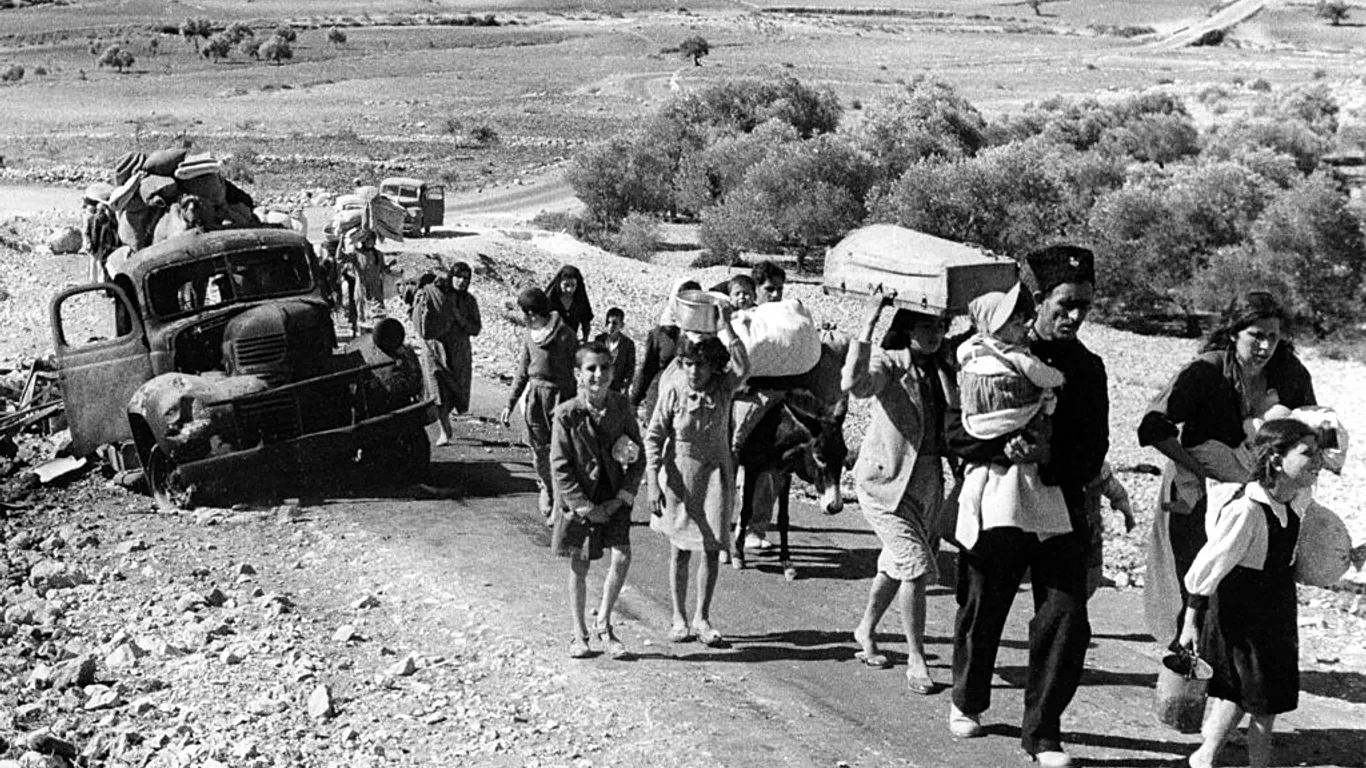
Nakba (Arabic: النكبة), literally meaning “Great Catastrophe,” refers to the forced displacement, dispossession, and occupation of Palestinian lands experienced by Palestinians following the establishment of Israel in 1948. [1, 2]
The key points of this tragedy for Palestinians are:
History: May 15, the day after Israel declared its independence on May 14, 1948, is commemorated annually as Nakba Day.
Forced Displacement: During the 1948 war and the establishment of the state of Israel, more than 700,000 Palestinians were driven from their homes and lands or forced to flee.
Refugee Status: These displaced people form the basis of the millions of Palestinian refugees who still live in various countries and refugee camps in the Middle East today. Symbol: The most important symbol of the Nakba is the “key”, representing the Palestinians’ belief that they will one day return to the homes they were forced to leave. [1, 2, 3, 4]
The Nakba is not just an event from the past, but for Palestinians it is the name of an ongoing struggle against dispossession and for their rights. [1, 2]
ISRAELIS ARE TERRORISTS
Isn’t this genocide?
There are ongoing deep debates in the international and academic world regarding the legal and historical definition of the Nakba. The question of whether the Nakba is a “genocide” can be viewed from different perspectives:
Definition of Ethnic Cleansing: Many historians and international organizations primarily define the events of 1948 as “ethnic cleansing.” This term refers to the systematic removal of a specific ethnic group from a region through the use of violence.
The Relationship Between “Ongoing Nakba” and Genocide: Today, many experts, civil society organizations, and United Nations (UN) special rapporteurs consider the Nakba not a limited event from 1948, but a systematic process of dispossession that continues to this day. In particular, recent events in Gaza are described by UN experts and some legal scholars as “ongoing genocide” or “a second Nakba.”
Legal Process: For an event to be legally recognized as “genocide,” an international court (such as the International Court of Justice) must issue a ruling to that effect. Currently, South Africa’s genocide case against Israel, encompassing policies ongoing since the Nakba, is pending before the International Court of Justice.
Cultural and Social Destruction: Some researchers argue that the Nakba falls under the category of “cultural genocide” not only due to physical killings, but also because of the destruction of villages, the changing of place names, and attempts to erase Palestinian identity. [1, 2, 3, 4, 5, 6, 7, 8, 9, 10, 11, 12]
In summary, although the events of 1948 are traditionally referred to as the “Great Catastrophe” and “ethnic cleansing,” today there are strong opinions among the public and many international legal experts that this process constitutes genocide, and ongoing legal processes are underway. [1, 2, 3]
About the Author