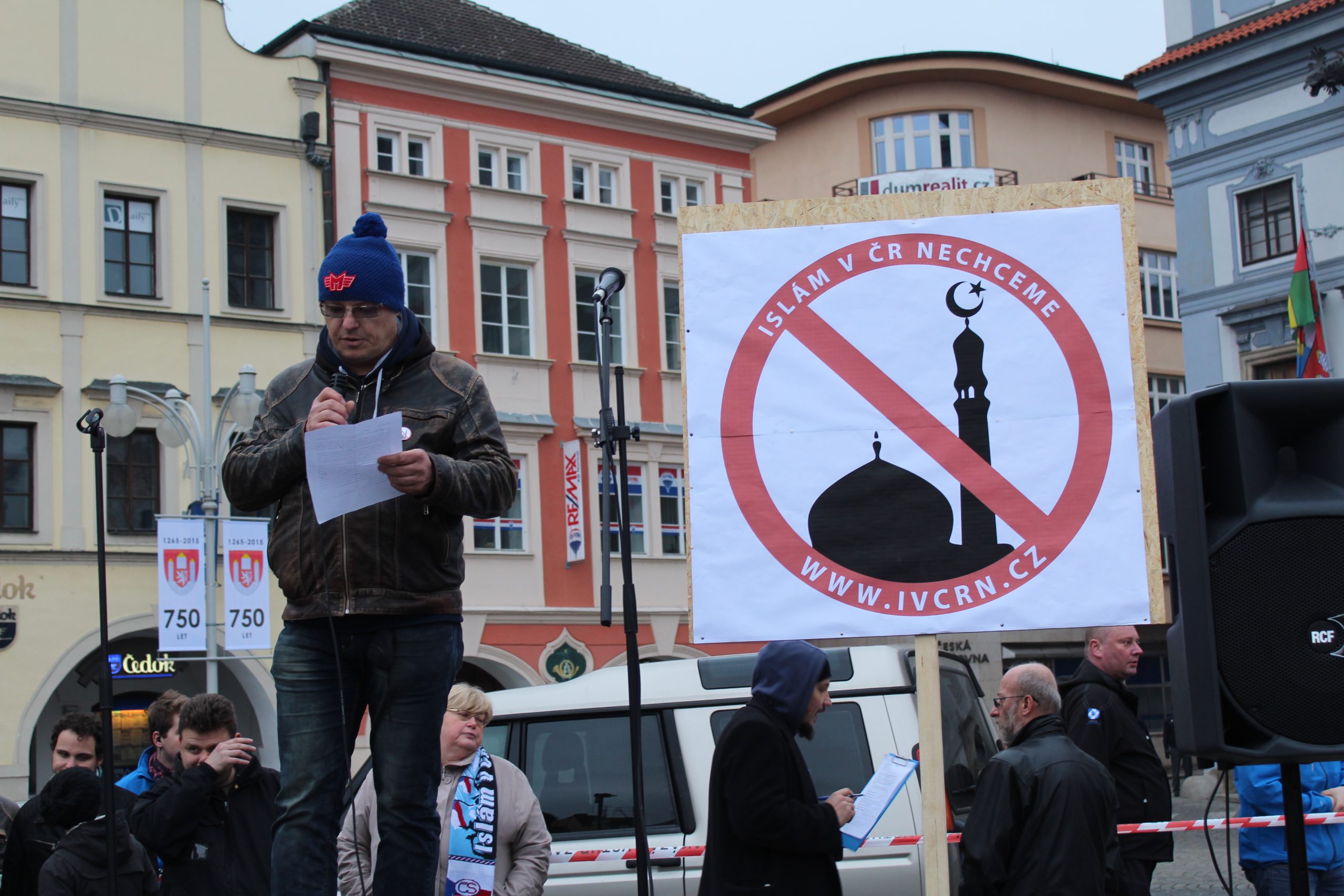
https://upload.wikimedia.org/wikipedia/commons/1/16/IVČRN_14-03-2015_2.JPG
Is Islamophobia on the rise worldwide? What are the reasons for this?
Posted on May 9, 2026 by Dtesca
Is Islamophobia on the rise worldwide? What are the reasons for this?
Is Islamophobia is not just an individual prejudice; it has become a systematic tool of oppression that makes the daily lives of Muslims difficult in a wide range of areas, from education to employment, from social rights to places of worship.
Yes, it is observed that Islamophobia (fear and hostility towards Islam) has systematically increased worldwide, especially in the 21st century. Experts define Islamophobia as today’s “modern racism” and state that this situation manifests itself through discrimination, verbal and physical attacks against Muslims. [1, 2, 3, 4]
The main reasons for this increase can be summarized under the following main headings:
9/11 Attacks and the Association with Terrorism: The actions of radical groups that emerged in the Islamic world after September 11, 2001, led to all Muslims being labeled as “potential terrorists” in the Western world.
Media and Disinformation: Global mass media and social media are triggering an irrational fear (phobia) against Muslims by spreading content that associates Islam with violence, terrorism, and intolerance.
Demographic Change and Migration: The increase in the Muslim population in the West and especially the waves of refugees from the Middle East and Africa are creating a “crisis of identity” and fear of cultural assimilation among the local population.
The Rise of Far-Right Politics: The strengthening of anti-immigrant, nationalist, and far-right parties in Europe has led to the normalization of Islamophobic rhetoric in politics and the positioning of Muslims as “the other.” Economic and Political Interests: Some political groups and interest groups use Islamophobia as a tool to legitimize their foreign policies or to consolidate society around a perceived enemy. [1, 2, 3, 4, 5, 6]
Islamophobia is not just individual prejudice; it has become a systematic tool of oppression that makes daily life difficult for Muslims in a wide range of areas, from education to employment, from social rights to places of worship. [1, 2]
Gemini: Would you like to review the reports on Islamophobia worldwide and the academic studies on this subject?
Dtesca: Yes, I would.
Current reports and academic studies on Islamophobia emphasize that this phenomenon has now transformed from just individual hatred into a form of “institutionalized racism.” [1, 2]
Here are some key reports and prominent findings in this area:
- Key Reports and Statistical Data
European Islamophobia Report (EIR 2024): Prof. Dr. Enes Bayraklı and Prof. This comprehensive study, edited by Farid Hafez, reveals that Islamophobia has deeply permeated state policies and media discourse in Europe. According to the 2024 report, there has been a significant increase in anti-Muslim hate speech, particularly following the events in Gaza.
EU Fundamental Rights Agency (FRA) – “Being Muslim in the EU” (October 2024): This report shows that 47% of Muslims have experienced discrimination in the last five years. This represents a significant increase from 39% in 2016.
US CAIR Reports: The Council on American-Islamic Relations (CAIR) reported a 69% increase in anti-Muslim hate incidents in the first half of 2024 compared to the previous year.
Tell MAMA (United Kingdom): According to 2024 data, anti-Muslim hate incidents in the United Kingdom, both online and in person, have reached the highest levels in the organization’s history. [1, 2, 3, 4, 5, 6]
- Prominent Academic Findings and Concepts
Symbolic Violence: In academic studies, Islamophobia is defined as “symbolic violence, which is more dangerous than physical violence,” based on Pierre Bourdieu’s theory. This means the systematic devaluation of the identities and religious symbols of Muslims.
Gender Dimension: Reports from the French CCIE (European Collective Against Islamophobia) show that the overwhelming majority of Islamophobic attacks target women, and these attacks occur most frequently in public spaces such as educational institutions and hospitals.
Cultural Racism: Current academic discussions indicate that Islamophobia has evolved from classical biological racism to “cultural racism,” where the cultural values of Muslims are excluded by portraying them as “incompatible with Western civilization.”
Pressure on Academic Freedom: Studies by the Georgetown University Bridge Initiative report that even academics researching Islamophobia are targeted, and academic freedoms are restricted in this area. [1, 2, 3, 4, 5]
- Studies in Turkey
The literature on Islamophobia in Turkey has been strengthening in recent years. As of 2021, over 100 books and postgraduate theses focus on this issue; Turkey uses combating Islamophobia as a “soft power” tool in international diplomacy.
About the Author